
Fawn Lake History
The Fawn Lake Community has a long and rich history.
As many of our street names suggest, our area is most noted for its role during the Civil War era and the Battle of the Wilderness. But there is so much more that makes our community special.

Before Fawn Lake: The First Inhabitants and the Transformation of the Wilderness
Before European settlers, the areas in and around present-day Fawn Lake were inhabited by Eastern Siouan-speaking tribes mainly from the Manahoac and Monacan peoples. They lived in palisaded villages and relied on agriculture, hunting, and foraging for subsistence. The Rapidan and Raphannock Rivers were essential for their transportation, trade, and seasonal migrations. By the late 1600s, eastern pressures from Powhatan expansion and European settlers caused most Siouan tribes to be displaced or absorbed into neighboring tribes.
In the early 1700s, European settlers expanded dramatically in our area. Our county’s namesake, Lieutenant Governor Alexander Spotswood was one of the first to recognize the potential of this area’s natural resources – rich in iron ore, forests to harvest for charcoal, and waterways to power furnaces. Spotswood obtained 86,000 acres under a Royal Land Grant across present-day Orange and Spotsylvania counties and established a lucrative iron smelting business. Each year, up to seven hundred acres of hardwood timber were harvested to burn in smelt furnaces. This dramatically altered the natural hardwood forests – which were replaced with dense undergrowth – second-growth thickets, briars, vines, and scrub. By the mid-1700s, the locals referred to this area as ”The Wilderness” due to its tough and tangled undergrowth – a name that later contextualized the 1864 Civil War battle.
The Legacy of the Estes and Row Families in fawn lake
Richard Estes (1758-1832) was a soldier during the American Revolution. In 1795, he bought roughly 200 acres of land from Edward Herndon (1762-1808) and established Greenfield Plantation on what is now much of the Fawn Lake neighborhood. Richard’s daughter, Nancy, married Absalom Row (from Orange County) in 1825. Absolom inherited the plantation after Richard’s death in 1832. The plantation remained within the Estes-Row families for 110 years before falling into disrepair and sold in 1905.
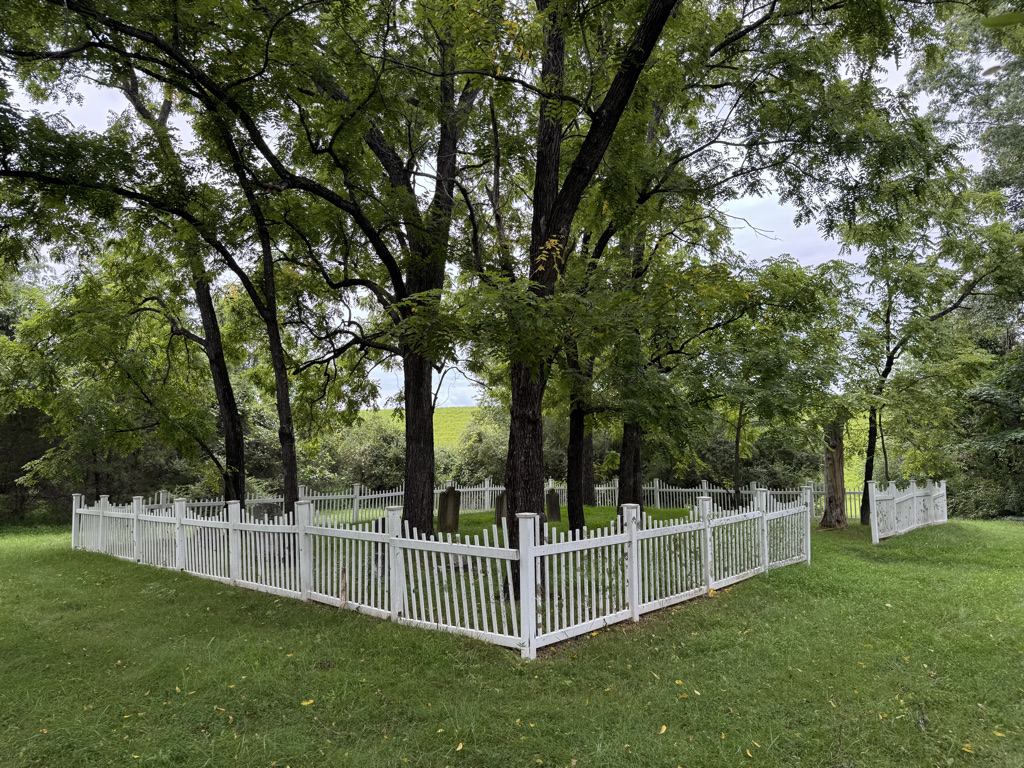
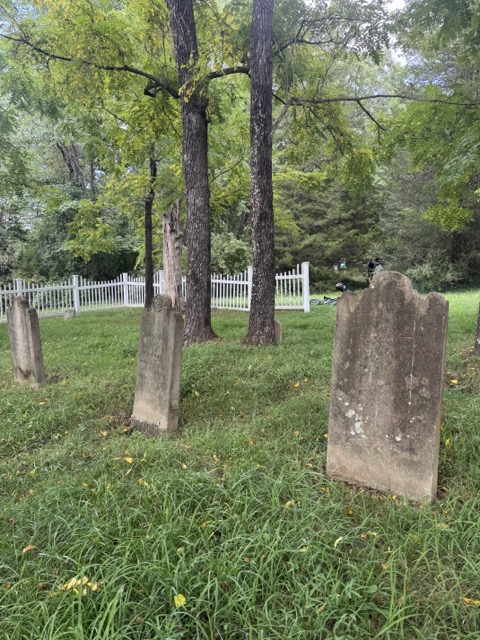
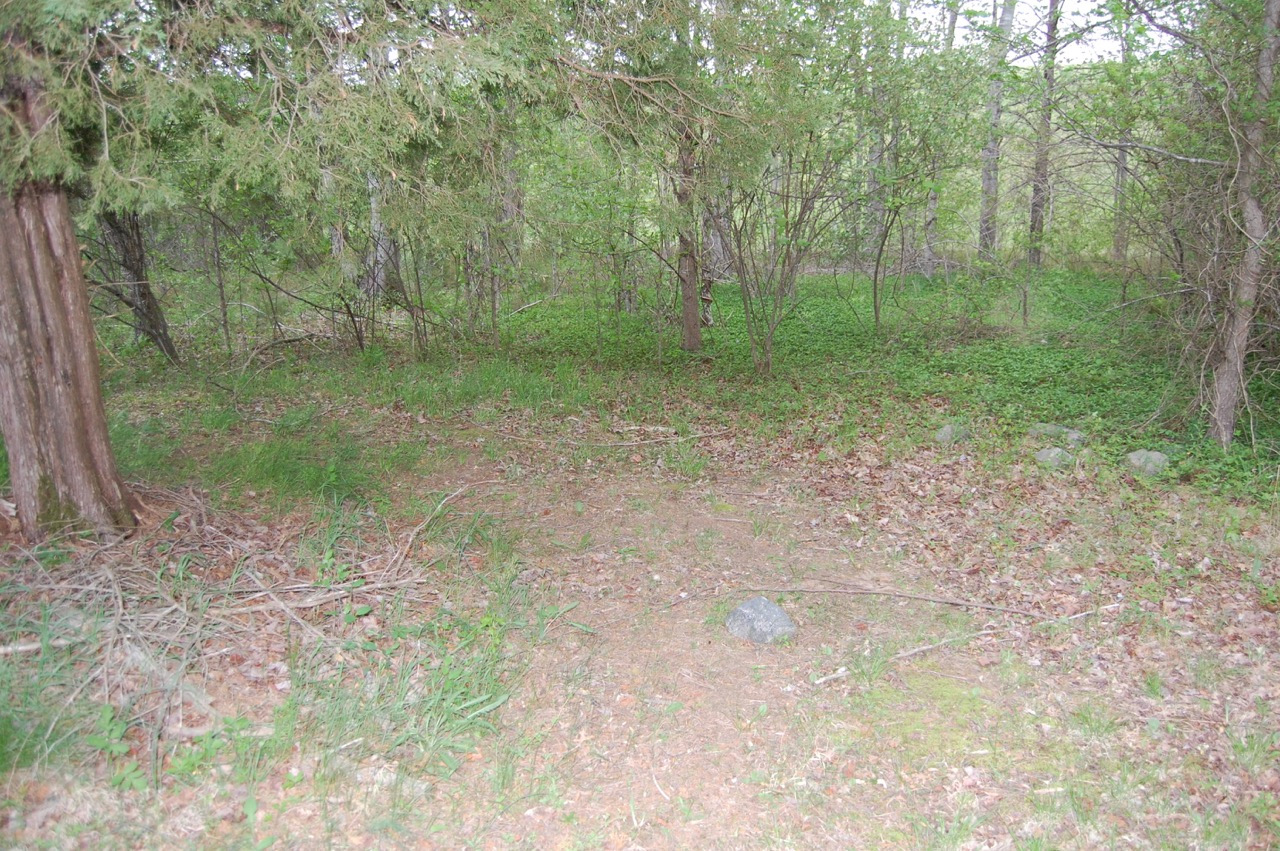
The only parcel not sold was the Greenfield cemetery which still exists just to the south of Fawn Lake’s dam. This cemetery is still owned by the descendants of the Greenfield Plantation who have a right to access the cemetery to this day. Richard Estes, his two wives, and at least a dozen of the Estes-Row descendants are buried there. About 180 yards to the northeast is the slave cemetery. Although this cemetery was documented in many historical records, its exact location was not substantiated until one of our neighbors, Gary Crone, led a study called “The Greenfield Project” which not only established the exact location but also formally registered the cemetery with the Virginia Department of Historic Resources in 2021.
Gary’s three reports on the Greenfield Project can be read here:
The Civil War (1860-1865) predominates local history with major battles and pivotal events in and around Spotsylvania county. The Fawn Lake area is no exception.
During the Battle of the Wilderness (May 5th-6th, 1864), much of our neighborhood was consumed by fighting for control of the strategic intersection of Orange Plank and Brock Roads. This portion of the Wilderness battle pitted the Army of the Potomac’s II Corps (commanded by Major General Winfield Hancock) against the Army of Northern Virginia’s Third Corps (commanded by Lieutenant General A.P. Hill). The battle was brutal, characterized by difficult maneuvers due to the dense underbrush, which often caught fire by musket fire. On the morning of May 6, 1864, the Union forces executed an attack which pushed the Confederate forces back until they were reinforced by Lieutenant General James Longstreet’s First Corps. Although Longstreet was wounded by friendly fire in the smoke and confusion, the First Corps reinforcements pushed the Union forces back to their original fortifications. (These fortifications are preserved by the National Park Service along the east side of Longstreet Blvd as you enter our community.) The battle ended when the Army of the Potomac withdrew to the southeast down Brock Road in search of a more hospitable battleground. General Lee, anticipating this move, also moved south along a parallel path through Greenfield Plantation. The two armies would soon meet again at the Battle of Spotsylvania Courthouse.
In 1915, Abby Row sold Greenfield to Scott Stephens for $500 and assumption of the property debt. The Stephens family worked the farm until 1923 when it was sold to J.S. Barnes. The property was bought by Noah Houck in 1932 and his extended family worked the farm until 1970, when it was bought by Charles Miller. Miller sold the property in 1972, to American Central Corporation, a subsidiary of International Paper.
American Central Corporation originally had plans to develop the property. They designed and built the present day dam in 1973 and established the 288-acre Fawn Lake. The property was initially used for hunting and fishing expeditions. The legendary coach of the Washington Redskins, Joe Gibbs, began fishing on Fawn Lake in the 1980s. Gibbs partnered with Jerry Riddle (Riddle Construction) and NTS Corporation, who bought the property from International Paper. NTS began development of Fawn Lake which included the Arnold Palmer-designed golf course in the late 1980s (which opened in 1995). NTS established the Fawn Lake Community Association (FLCA) in 1990 and appointed the seven Board members. As resident homes increased, three Board seats were reapportioned to residents in 1998. The final transition to an all-resident board occurred in November of 2023. Currently, Fawn Lake has approximately 1400 homes in our premier community.
Sources:
“Fawn Lake: On the Water in Spotsylvania” Angela E. Couloumbis, Washington Post, March 1, 1996
“Fawn Lake Links to History,” Donald A. Bowers, Cardinal Press, 2008
“The First Peoples of Spotsylvania,” Spotsylvania News Flash, Nov 7, 2024.
“The Compact History of the Civil War,” Col. R. Ernest Dupuy and Col. Trevor N. Dupuy, MJF Books, 1960
“Greenfield and the Peculiar Institution,” Pat Sullivan, Spotsylvania Memory Blogspot, Sep 5, 2011.
“Greenfield,” Pat Sullivan, Spotsylvania Memory Blogspot, Oct 30, 2013.
“The Greenfield Project,” Gary Crone, Jun 15, 2021
“The Greenfield Project Research Report,” Gary Crone, May 12, 2023
“Greenfield Cemetery Delineation, Spotsylvania County, Virginia,” Dovetail Cultural Resource Group, May 2023
“A Hitchhiker’s Guide to the Fawn Lake Community Association,” Gary Crone, June 27, 2023